


Summer, Summer, Summertime
As we shift into the summer season, things begin to slow. At least it feels like it. Traffic gets lighter; schedules become wonky due to camps and trips; people kick off early on Friday; open-toed shoes are okay in the office (or are they?). However, what doesn’t stop is news, and as communications professionals, we’re season agnostic.
To recap the summer of 2025, for example, the Epstein files controversy exploded, rippling through cultural and political cores; President Trump’s trade and tariff negotiations with allies hit headlines; there was escalating tension between Israel and Iran on the international front; the tragic flooding in Texas claimed lives and sustained national attention; the AI conversation consumed stories about media and journalism, and on the business side, Nvidia became the first company to reach $4 trillion valuation; and Diddy’s trial absorbed the courtroom drama space. In short, a “summer slowdown” for us is a myth. In Washington, lawmakers and reporters may leave town, the social whirl may grind to a halt, but reality has a way of intervening.
Taking advantage of these summer months is always smart, and that’s how we look at it. We’re on call for crises, we’re cultivating pitches, we’re creating fulsome plans for the fall, we’re looking at the calendar for events and opportunities, and we’re combing the data collected by our AI tools to drill down on what people are saying about politics, policy, culture, people, and who- and what- are the next potential headlines. Reputations can still change in an afternoon, and a social post, leaked memo, earnings miss, or breaking news alert can instantly become the only thing anyone is talking about. The organizations that navigate the best are not the ones who are scrambling to react. They’re the ones that have used the quieter weeks to prepare. The next big story is just as likely to break in June as it is in January. And when it does, no one will care that it was supposed to be a slow news day.
How Do You Run Crisis Plays in Real-Time for the Enhanced Games?
Lessons in crisis communications from one of the most scrutinized live-event environments in modern sports.
Launching a live event on its own is difficult under any circumstances.
Launching a premier global sporting event, under live broadcast conditions, intense public scrutiny, and zero operational precedent, is a whole other ballgame.
Last weekend, an inaugural and wildly disruptive sporting event brought together elite athletes in swimming, track, and weightlifting for a globally streamed, daylong competition that immediately became one of this year’s most watched and debated events in sports. It was, pardon the pun, a Super Bowl of possibilities for the Invariant crisis and risk team.
The Enhanced Games took a sporting norm and turned it on its head. Athletes were permitted to compete under medically supervised performance-enhancement protocols centered on transparency, scientific oversight, and athlete choice, an approach that generated enormous media attention, scrutiny, and debate well before opening day. And while the concept was incredibly innovative, a disruptive startup attempting to challenge an entrenched industry, such as sports, presents a zero-margin-for-error situation on the day-of.
Globally broadcast, highly anticipated, fueled by a controversial model, and being watched, the event was high stakes. The founders knew their model was controversial, but rather than simply hoping for the best (which, by the way, is not a strategy), they took an incredibly smart approach: they prepared for the absolute worst.
Working closely with the company’s leadership, Invariant developed an exhaustive, crisis communications and operational resilience playbook detailing exactly how to handle the what-if scenarios that could have popped up along the way: venue security threats, severe medical emergencies, and weather contingency plans, to name a few. We also operationalized those communications protocols live, managing real-time crisis communications risk throughout the event itself. Ultimately, everything went off without a hitch. The crises we planned for never materialized.
Was it a good use of resources when nothing we planned for actually happened? Absolutely. Running the crisis communications for this event reinforced a core philosophy of our practice: preparing for a disaster is exactly what prevents one. The operational rigor required to build a crisis playbook actively engineers a successful baseline.
Here is what we implemented and how other event startups can use this approach to help drive a successful launch.
Building Muscle Memory with the “First 60-Minute” Rule: When developing the playbook, we mandated a strict “First 60-Minute Discipline” for any incident. We established a rigid, non-negotiable checklist: confirm safety first, verify facts from a single operational source, pause all scheduled social media, and deploy pre-approved holding language. No executive would be allowed to speak until we cleared these steps.
By training the client’s team to operate with surgical precision during a hypothetical disaster, we gave them the muscle memory to operate flawlessly during the normal broadcast. Because the staff knew exactly how our team would verify facts before communicating, we eliminated the possibility of internal chaos, rumors, and miscommunications that normally plague first-year events.
Centralizing Command to Eliminate Rogue Messaging: A common failure point for event startups is the “leaky venue,” where venue contractors, junior staff, and stressed executives give conflicting explanations to the press. To prevent this, we were in a physical Command Center and created a digital “Incident Communications Response” team (ICR). The ICR was designated as the absolute single source of truth. Our protocol dictated exactly who was authorized to speak to the media, who spoke to the talent, and who spoke to investors. Centralized command doesn’t just stop bad news from leaking; it makes good news more powerful.
Pre-Wiring Broadcast Integration: For events with a live broadcast component, the highest narrative risk is what the commentators say when things go wrong on camera. We prepared specific “Off-Air Producer Guidance” and “On-Air” scripts for the broadcast partners to ensure commentators wouldn’t speculate during an emergency.
We built the communications plumbing with the broadcast partners before the event began. Because we had direct lines open to instantly kill a bad narrative during an emergency, we were perfectly positioned to feed the producers the right narrative and data during moments of triumph.
Pre-Resolving Legal and PR Friction: In most organizations, capitalizing on a live event is delayed because public relations has to chase down legal for approvals. By the time a statement is cleared, the social media conversation has moved on. We mapped out a precise chain of command within the playbook, clearly defining where the Chief Legal Officer and our communications team intersected to clear external messaging. Holding statements for various scenarios were pre-written and pre-approved by legal weeks in advance. By pre-clearing the workflow, we established the boundaries of what could and could not be said. This gave our team the ability to move at the actual speed of the live event without exposing the company to risk.
Turning Crisis Communications Preparedness into a Business Asset: Startups rely on the trust of investors, top-tier sponsors, and high-profile talent. These stakeholders are hyper-sensitive to reputational risk.
What this client understood better than most is that a robust crisis playbook is not just an insurance policy; it is a vital business development asset. When pitching a wary sponsor or a cautious investor, a startup that can demonstrate a comprehensive incident response protocol completely changes the dynamic of the room. It proves the startup is a mature, enterprise-grade organization that treats safety, regulatory compliance, and brand reputation with absolute discipline. For ambitious event startups, you don’t build a crisis communications and resilience plan just to survive a bad day. You build it to guarantee that your best days are executed as perfectly as possible.
Message Matters
Analog + Print = Reaching Gen Z?
Have you noticed more 20-somethings wearing wired headphones recently? There’s a reason. Global sales of wired headphones rose 20 percent in the first six weeks of this year, according to The Times, with searches for wired headphones trending upwards on Google even in the last couple of months. What does that tell us? Gen Z is pushing back on always-online culture. Online conversations around Gen Z’s interest in analog technology, offline experiences, and authenticity-driven lifestyles generated nearly 1.5 million mentions over the past year, with discussion volume peaking in early 2026 at nearly 140k mentions. The sustained growth suggests these behaviors are evolving beyond niche preferences into a broader cultural and consumer shift. But it’s not just aesthetic; it’s economic.
So if everything “out” is “in” again for Gen Z, then messaging becomes more important. For example, vinyl sales in the United States topped $1 billion for the first time since 1983, driven largely by younger consumers embracing physical and collectible media. Dust off Mom and Dad’s records. At the same time, Gen Z’s growing support for local businesses, independent creators, and handmade goods is helping fuel a global handicrafts market valued at over $700 billion+. For brands, this is more than a nostalgia cycle. It’s a signal.
Research from McKinsey shows Gen Z consumers place a premium on authenticity, identity, and alignment with their values when deciding which brands to support. In a media environment saturated with optimized content, younger audiences increasingly reward brands that feel tangible, community-driven, and human. That presents a growing challenge for communicators. Gen Z is still highly digital, but their attention is increasingly fragmented across niche platforms and smaller communities, making it harder for traditional social-first strategies to cut through.
The brands best positioned to win over the next several years may be the ones willing to rethink what engagement looks like:
IRL activations and community events,
creator partnerships rooted in subcultures,
tactile or collectible brand experiences,
direct mail and print campaigns,
and messaging that prioritizes personality over polish.
The takeaway isn’t that Gen Z is abandoning technology. It’s that “digital native” no longer means “digital only.” As younger consumers gain more purchasing power, brands that feel less algorithmic and more authentic may have the advantage.
-Ji Reichle, Anne Patterson, and Morgan Baker
Our Insights: PRWeek’s Agency Business Report
PRWeek recently released its annual “Agency Business Report,” with Invariant proud to rank among the top 35 firms in the United States. And while we are thrilled to once again be in the upper echelons in the report this year, the data reflected a broader ongoing evolution throughout the communications industry – the increasing integration of public affairs and corporate communications. What was once viewed as separate functions with intermittent overlap are now not only interconnected but core to how companies manage reputation, navigate risk and uncertainty, and advance business priorities.
Political polarization, regulatory scrutiny, geopolitical instability, rapid technological change, and heightened stakeholder expectations are converging in ways that directly impact companies across sectors. Policy developments quickly become reputational challenges, while corporate decisions just as easily trigger political or regulatory attention. Successful organizations approach communications, government affairs, and stakeholder engagement holistically.
Effective counsel today requires the ability to align strategic communications, public affairs, crisis management, advocacy, and executive positioning into a unified approach. Firms that operate at the intersection of policy and reputation are better positioned to help clients anticipate challenges, shape narratives, and respond with speed and consistency.
The implications are significant. It means operating in an “always on” environment. Leadership teams should ensure public affairs, communications, legal, and business units are aligned not just early for strategic issues or coordinating only during moments of crisis – but deeply integrated operationally on a daily basis. Organizations should also incorporate political scenario planning into broader enterprise risk management efforts, recognizing that external pressures now move faster and carry wider consequences than in previous cycles. Ongoing, proactive engagement with policymakers, employees, investors, media, and community stakeholders is necessary to both build and maintain trust and credibility.
As organizations face more interconnected challenges, the ability to integrate policy insights with a sophisticated communications strategy is no longer a separate endeavor, but rather a uniform approach essential to protecting reputation, influencing outcomes, and sustaining long-term success.
Communicating with AI
Using AI is quickly becoming a standard part of communications work. Used well, it can make us faster, sharper, and better informed. Used poorly, it can make our writing flatter, our thinking softer, and our work harder to trust. As these tools evolve, so will the way we use them. Going forward, we’ll share simple, practical prompts and lessons we’re learning at Invariant to help make AI more useful in day-to-day work.
Can you remove all language that reads like it was written by AI and revise, so it sounds like I wrote it? An LLM may not be great at initially avoiding their own tropes: the overused phrases, tidy-but-empty transitions, and sentence structures that show up in every AI-generated draft. However, a correct prompt from you can fix that. Your LLM will learn your tone over time, especially if you provide examples of your writing or share examples of your final deliverables, so it gets used to how you edit. The more specific you are about what sounds like you, the better the output gets.
What is the main argument, and what is getting in the way? As communications professionals, we need to make it easy for our audience to understand the point and why it matters. AI-generated drafts can include too much context, too many caveats, or too many polished but unnecessary sentences that distract from the message. This prompt helps identify where the draft drifts and refocus it around what the audience needs to know.
Can you cut 30% of this without losing meaning? LLMs do not naturally prize brevity. They are built to be comprehensive, which often means they give you more words than you need and more explanation than your audience wants. Asking directly for a shorter version forces the tool to prioritize the actual argument rather than dance around it.
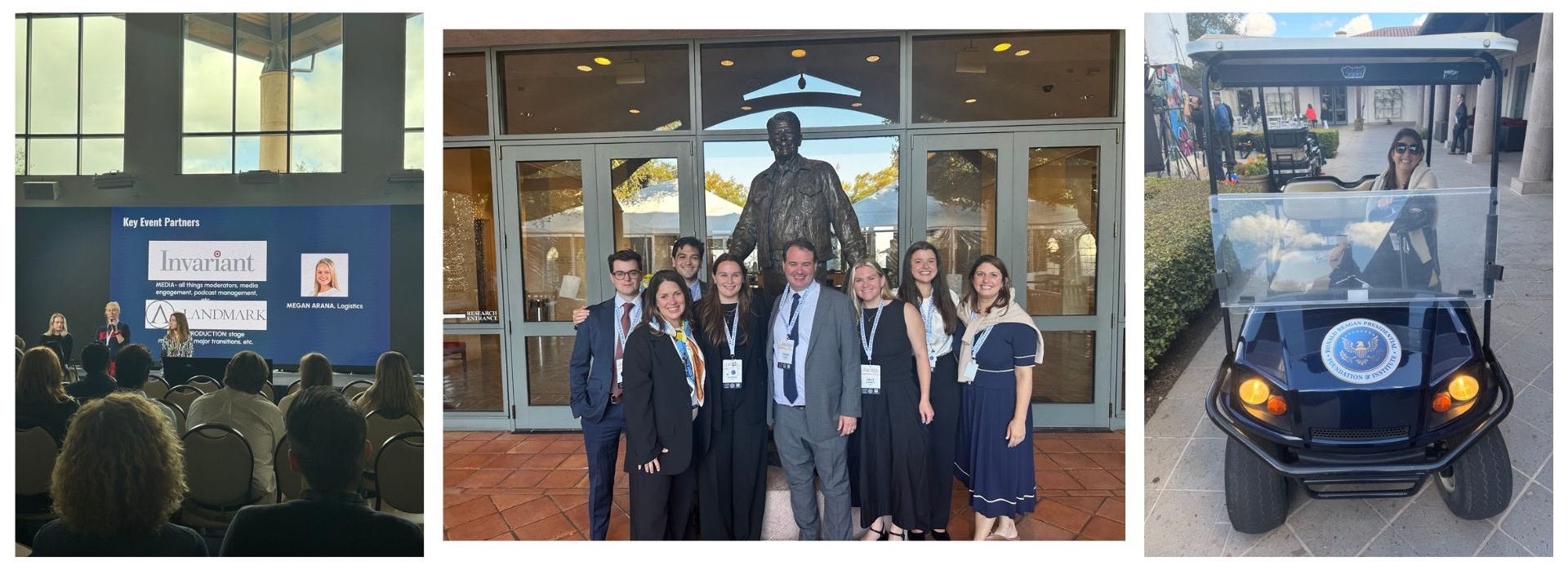
Invariant‘s Communications Team IRL
Another successful trip to Simi Valley, CA, for the 2nd-annual Reagan National Economic Forum.
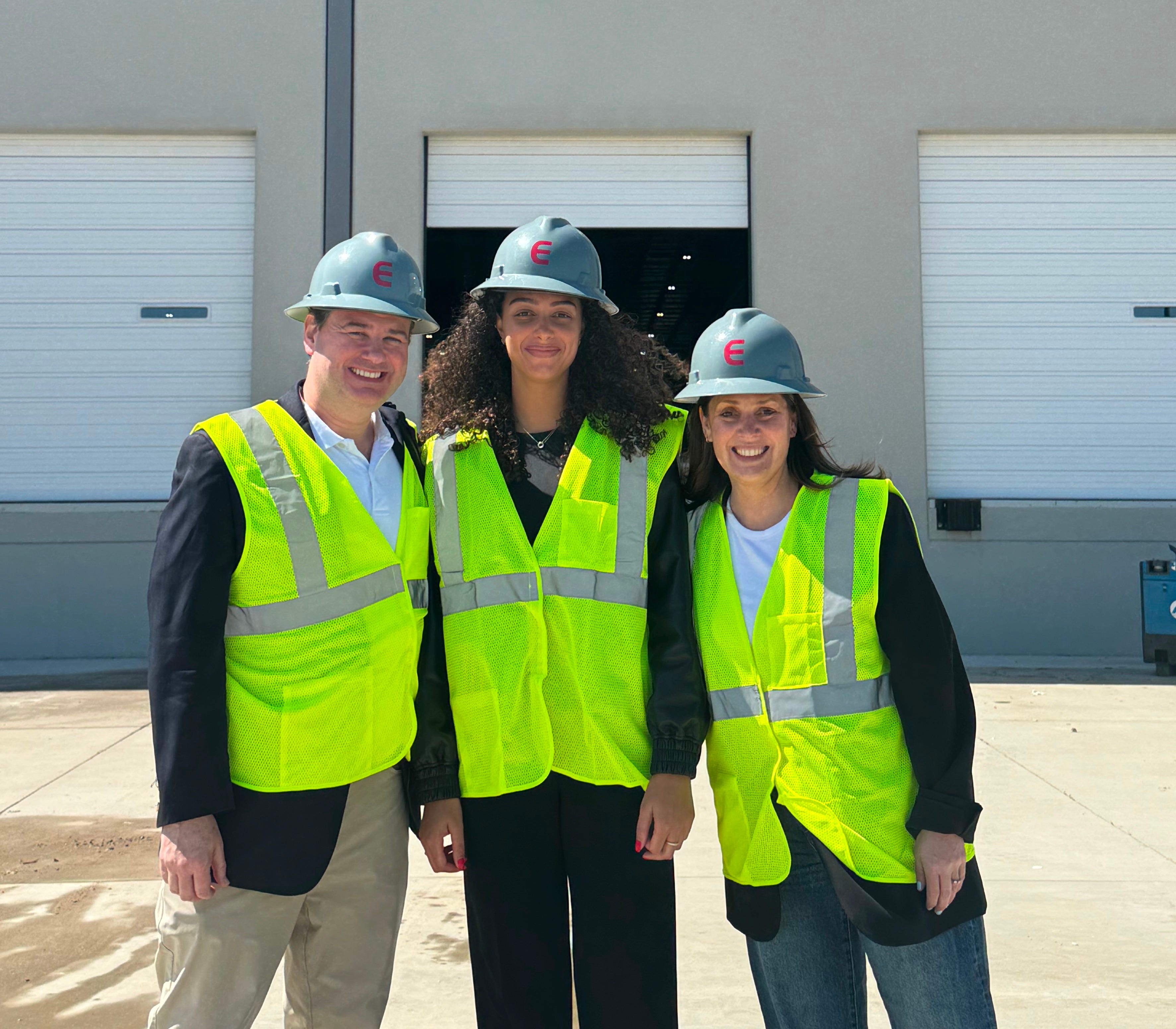
Our team on the ground with Vulcan Elements, showing that we can wear many different hats!
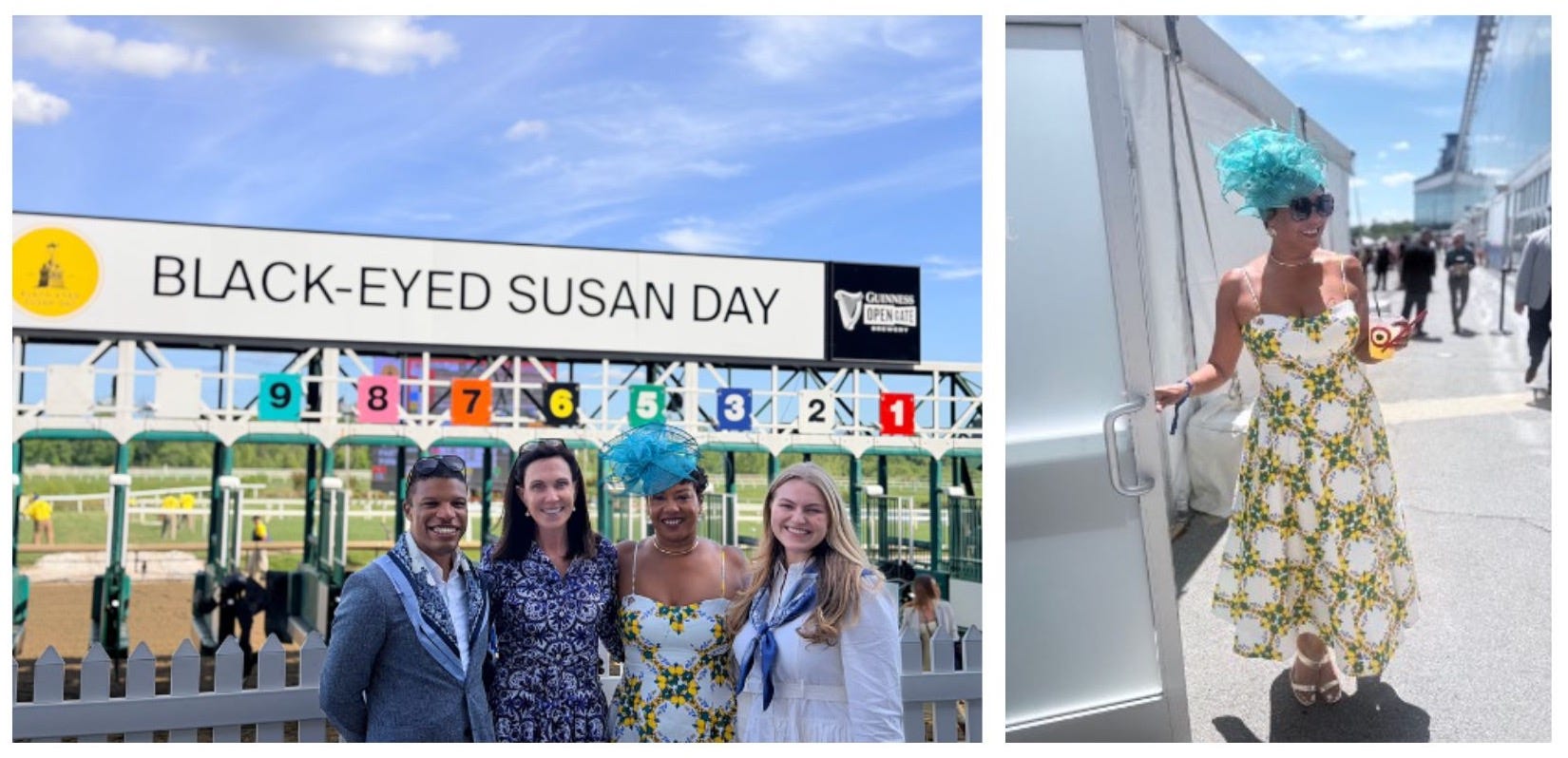
Invariant sponsored an event for clients and key stakeholders at the Black-Eyed Susan Stakes.
The Thing You Should Know But Probably Don’t
Where we share the latest buzz phrases hitting the Gen Z cultural vernacular.
Gen Z isn’t as scared as their slang suggests, so don’t fear the “I fear.”
“I fear” is Gen Z’s way of soft-launching bad news or a confession. Not to be confused with actual fear, the phrase is a slightly dramatic, usually humorous way of admitting something may be true, embarrassing, unfortunate, or undeniable. It’s less panic, more reluctant honesty.
Example: “I fear this meeting could have been an email.”
Or: “The Senate is headed toward a Vote-a-Rama, I fear.” (A real text I received from a Hill staffer friend.)
-Lucy Karlin and Sally Blodgett
Thanks for reading The Variable: Invariant’s Strategic Communications Newsletter! If you liked this, subscribe to get our other Invariant newsletters.